Patient Safety Framed as Governance Imperative as IHD 2026 Begins in Hyderabad

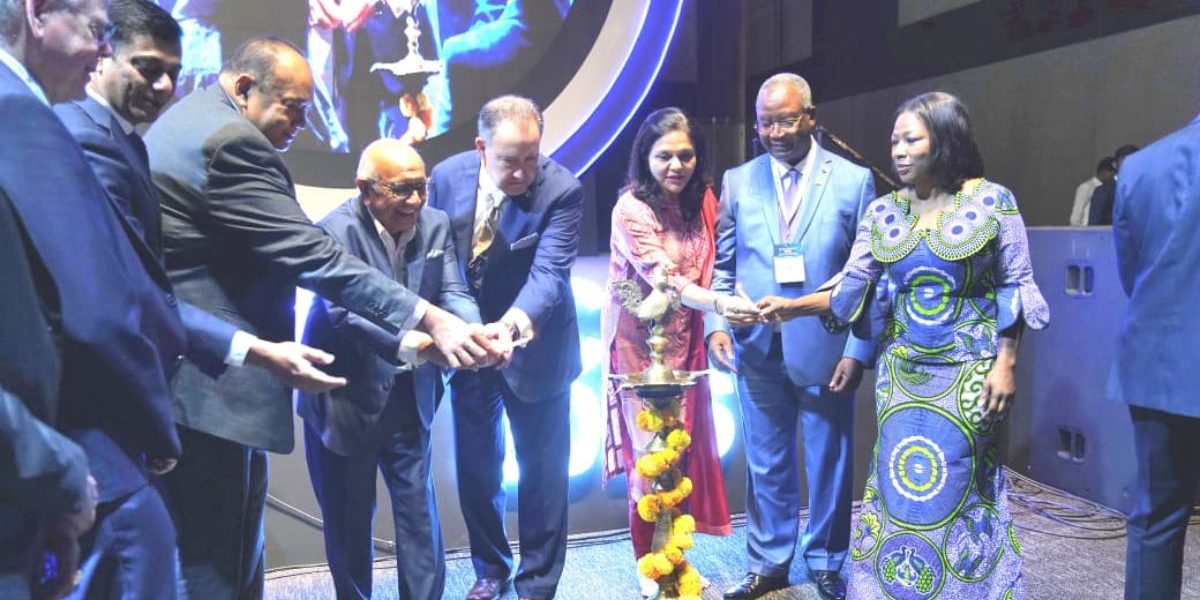
Healthcare leaders from India and abroad gathered in Hyderabad today as International Health Dialogue (IHD) 2026 commenced with a sharp focus on patient safety as a leadership responsibility shaped by equity and responsible digital transformation. Held under the theme Global Voices. One Vision., Day 1 underscored India’s growing influence in shaping global patient safety discourse.
Opening the conference, Dr. Sangita Reddy highlighted IHD’s founding intent to democratise learning beyond institutional boundaries, questioning why innovation remains siloed and reiterating the need to share practical lessons globally. She noted the scale of IHD 2026 participation, with over 5,000 registrations, 300+ research submissions, and 120+ award entries from 75+ institutions.
Dr Jayesh Ranjan stressed that patient safety systems must reflect lived realities. He said safety means different things to different patients and argued that designing for the most vulnerable strengthens systems for all. Addressing digital inclusion, he warned that mindset gaps often outweigh infrastructure gaps.
Dr. Madhu Sasidhar emphasised that patient safety is an organisational leadership responsibility requiring regulators, governments, providers, accreditors, and technology firms to act in coordination rather than isolation.
The need to transition from reactive care to prevention-driven models featured prominently. Dr Sangita Reddy noted the mismatch between rising healthcare demand and linear solutions, calling for sharper prevention strategies and disciplined digital adoption.
Dr. Carsten Engel cautioned against symbolic safety efforts, warning of “safety clutter” and urging leaders to understand why actions make sense in real contexts rather than assigning blame.
Dr. Atul Mohan Kochhar highlighted that patient safety is a moral, social, and economic imperative, arguing that implementation efficiency—not policy alone—determines outcomes. He reiterated that zero harm must be the accepted benchmark.
During the day, Apollo Hospitals signed an MoU with Roche Diagnostics India to explore AI integration in clinical decision-making, aimed at improving judgement consistency, early risk detection, and standardised care delivery.
Dr. Rohini Sridhar stressed that culture—not technology alone—drives zero-harm outcomes and that system-wide learning must follow every adverse event.
The day concluded with a startup spotlight session where digital health startups presented solutions addressing workflow safety, decision support, documentation, and patient engagement.
IHD 2026 continues on January 31 with sessions on patient safety, digital transformation, healthcare operations, and clinical learning, alongside IPSC 2026 and THIT 2026 showcases.