
Building an Ecosystem of Thalassemia Care – Manipal Hospital Yelahanka Leads the Way, A Step Towards Stronger, More Compassionate Futures

BENGALURU, India, April 11, 2026 /PRNewswire/ — Some healthcare initiatives treat a condition. Others try to change the way we live with it. And then there are those rare efforts that bring people, purpose, and possibility together, all in one room.
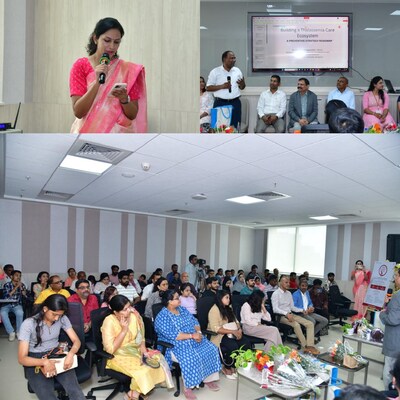
On 22nd March 2026, Manipal Hospital Yelahanka, in collaboration with the Thalassemia and Sickle Cell Society of Bangalore, hosted a comprehensive patient-centric programme titled ‘Building an Ecosystem of Thalassemia Care.’
The programme was led by a multidisciplinary team of eminent doctors at Manipal Hospital Yelahanka, including Dr. Chetan Ginigeri, Director – Paediatric and Paediatric Superspeciality Services (Organising Chairperson); Dr. Aarthi N, Consultant – Paediatric Haematology Oncology and BMT (Organising Secretary); Dr. Sagar Bhattad, Lead Consultant – Paediatric Immunology, Rheumatology and BMT (Joint Secretary); Dr. Vinay Munikoty, Lead Consultant – Paediatric Haematology Oncology and BMT; and Dr. Ramitha Bhat, Consultant – Paediatric Haematology Oncology and BMT; along with Mr. Gagandeep Singh Chandok, President – Thalassemia and Sickle Cell Society of Bangalore, and Chief Guests including Shri Das Suryavamshi, Ex commissioner PWD, Karnataka, and Dr. Deepa Bhat, Professor of Anatomy and Genetic Counsellor, JSS Medical College Mysore.
Alongside multidisciplinary scientific sessions spanning prevention, management, and curative care, what truly anchored the programme was its ability to translate clinical intent into tangible patient support.
Emphasizing the need for integrated care, Dr. Chetan Ginigeri noted, “When we bring diagnostics, treatment planning, and counselling together in one place, we reduce the burden on families. This programme is about making care more coordinated, more accessible, and ultimately more humane. It’s about ensuring that no patient feels like they are navigating this journey alone.”
Building on this, Dr. Aarthi N highlighted, “This programme was designed as a comprehensive care platform — bringing together clinical evaluations, endocrine assessments, HLA typing, and advanced imaging like MRI T2. More importantly, it focused on continuity, guiding families through long-term monitoring, treatment planning, and follow-up. Structured, accessible care not only improves outcomes but also gives families clarity and reassurance.”
By integrating diagnostics, counselling, and clinical expertise, the initiative reflected a shift from isolated interventions to a more cohesive, patient-centric care ecosystem. The sessions also reinforced that thalassemia care today extends beyond management, with curative pathways such as bone marrow transplantation becoming increasingly accessible.
Speaking in this regard, Dr. Sagar Bhattad said, “Bone marrow transplantation offers a definitive cure for many children with thalassemia. However, the window for optimal outcomes is early in life. Timely diagnosis and referral, before complications set in can be life-changing. Awareness among families and primary care providers is therefore absolutely critical.”
Dr. Vinay Munikoty added to the perspective and highlighted the evolving role BMT stating, “Bone marrow transplantation is a transformative option across blood disorders — including thalassemia, cancers, and sickle cell disease. What is crucial is identifying the right patients at the right time and guiding families through this journey with clarity and confidence. With advancements in transplant protocols and supportive care, outcomes continue to improve, offering many patients not just treatment, but a real chance at cure.”
Delving into the critical aspect of day-to-day management of thalassemia, Dr. Ramitha Bhat said, “For patients with thalassemia, regular blood transfusions are essential to sustain life, but they come with their own set of challenges. It is important that families understand when to initiate transfusions, how frequently they are needed, and the precautions required to minimise risks. Equally important is iron chelation therapy, because with repeated transfusions, iron accumulates in the body and can lead to serious complications if not managed well. Through sessions like these, our goal is to simplify these concepts for families, so they feel more confident and involved in the care process.”
Dr. Deepa Bhat steered the conversation towards prevention, genetic counselling and early screening. “Thalassemia is preventable with the right awareness. When individuals understand their carrier status before starting a family, they can make informed choices. Genetic counselling is not just about information — it is about giving families the power to prevent future suffering,” she stated.
Over 40 patients with thalassemia major underwent detailed evaluations, supported by active participation from caregivers. What stood out was not just the scale, but the depth of care delivered. The programme also focused on accessibility, offering:
- Free HLA typing camps with Bal Ayush Foundation and DKMS
- Subsidised MRI T2* scans for iron overload assessment
- Comprehensive blood investigations and health summaries
- UDID registration support
- Leukocyte filters for early registrants
Advocacy That Translates into Action
Another key highlight of the day was the discussion on PWD rights in Karnataka, where policy and implementation gaps remain. Mr. Gagandeep Singh Chandok said, “Recognition of blood disorders under PWD is an important step, but implementation is where the real change must happen. Patients need access to benefits, education, and social support systems. Building awareness, encouraging UDID registration, and creating a strong patient registry are essential to shaping better policies.”
The event also saw the presence of Mr. Praveen Kumar TM, State Coordinator, State Blood Cell, National Health Mission, Directorate of Health and Family Welfare Services, Arogya Soudha, Bengaluru, 2026 Padma Shri Awardee Dr. Suresh Hanagavadi, Founder President, Karnataka Hemophilia society, Retd. As Professor of Pathology at JJM Medical College, Davanagere, Karnataka, Ms Aishwarya S, UDID State Co-ordinator DEPWD, Department of Empowerment of Differently Abled and Senior Citizen, Govt. Of Karnataka, Sri Kanagasabhapathi, Rehabilitation officer, CRC (central govt), and Dr Meera, Consultant – Haematology, Victoria Hospital, all contributing meaningfully to the cause with their valuable insights.
This initiative marks an important step in Manipal Hospital Yelahanka’s commitment to building a structured, inclusive, and future-ready thalassemia care ecosystem, one that supports patients across every stage of life.
For more information, please visit: https://www.manipalhospitals.com/
Photo: https://mma.prnewswire.com/media/2953787/Thalassemia_Care_Manipal_Hospitals.jpg
 View original content to download multimedia:https://www.prnewswire.com/in/news-releases/building-an-ecosystem-of-thalassemia-care–manipal-hospital-yelahanka-leads-the-way-a-step-towards-stronger-more-compassionate-futures-302739704.html
 Disclaimer: The above press release comes to you under an arrangement with PR Newswire. Daily India News takes no editorial responsibility for the same.